A Room of One’s Own

No Telling

A woman must have money and a room of her own if she is to write fiction.
~ Virginia Woolf

This has always been one of my favorite quotes. Not because it’s true, mind you, but because it’s amusing. If it were really true, there would be four, maybe five women in the whole world who had the ingredients necessary to write even flash fiction. Forget writing a novel.

I know a lot of women who write and they work the whole business piecemeal – half an hour here, fifteen minutes there, maybe an hour after the kids go to bed and if they don’t fall asleep on their keyboards before page three. Most of us sneak writing in between loads of laundry and incessant interruptions about Where Things Are. We are the keepers, we gals, and that always manages to come first because the guilt our mothers taught us stuck. Hard.

A room of one’s own? Unless she’s got one of those creepy “safe rooms” that locks hydraulically and requires a secret code to enter, she’ll never find a room no one else feels free to enter. And it doesn’t even matter if she’s got one of those, because no amount of expensive sound-proofing will drown out the pleading on the other side of the wall.

Here’s the thing: I’m not complaining. I generally love interruptions because they mean my house is full of life and love. It’s impossible to get deeply into a story that way, so I schedule my heavy-duty writing time in the early mornings for that very reason. You wouldn’t believe how much I can write in an hour and a half of complete quiet. The rest of the day belongs to other things and plenty of them.

It’s not the room, you see, it’s the silence.

The money thing is shiftier. Sure, I can imagine having enough money to buy time away from work. I think about this often when passing through states with lottery tickets for sale at gas stations (by the way, we’re beginning a state lottery here soon and I’m VERY excited). I’m not much of a math person, but I can wrap my head around the astronomical odds of winning such a thing as enough money to write fiction. It’s fun to think about, but it’s not going to happen. I’m guessing Virginia needed less money back then.

My theory about women and piecemeal writing is that we’ve all found something that fits our interruptible lives – blogging. Short pieces and instant publishing gratification between dentist appointments and fighting children…no wonder the blogosphere is awash in mommy blogs.

And I say, attagirl.

Maybe all of us aren’t producing Woolf-level fiction, but we get the writing done with a sense of accomplishment and a saucy pop when we hit “publish.” Nothing wrong with that. For heavy-lifting fiction there are always stolen hours late and early. I don’t know about you, but I’m not missing a hug from The Perfect Grandson just to get my head more deeply into a plot. The plot will wait for silent hours, but the boy will be a man in an instant and give his hugging to someone else.

(Note: During the process of writing this post I made two pitchers of iced tea, took one phone call, found a lost book, switched out the laundry, and comforted my daughter. Just so you know.)
The Age of Aquarius and Mimeographed Worksheets

No Telling
(Scribbling Paradisio by Dore’, with a little help from me.)

I taught at a traveling writing workshop this summer down in Harmony Grove, Arkansas. School teachers, tired ones, met with us in that sweet but woebegone way public teachers do at the end of the school year. This is when they love their students the most but are cheerfully able to say good-bye for the summer. The workshop was splendid, and you can read about it here and here.

We used a book I’ve had in the workshop arsenal for a few years called The 9 Rights of Every Writer: A Guide for Teachers. It’s geared towards educators, but it’s a fine fist-in-the-air book about what every writer needs/deserves. These are breathtakingly simple. Every writer has the right to:

  • reflect
  • finding personally important topics
  • go off topic
  • personalize the writing process
  • write badly to unearth and clarify meaning
  • observe other writers at work
  • assess constructively – and well
  • experience structural freedom
  • unearth the power of each writer’s voice.

This is a powerful book for teachers. You see, most of them are scared to death of students’ writing because many teachers don’t see themselves as writers. That’s an important hurdle during the workshops.

As an opening scribbling prompt, my partner-in-workshop-crime Stephanie asked all the teachers to pick one of the rights they wish they’d had as students. Good opener. We all began writing. Kind of.

My pen hovered over the page for a bit. It had been a few years (coughcough) since I was a public school student. I tried to summon up something, some writing experience gone awry or pinch-nosed schoolmarm with a bleeding red pen. Nothing.

The thing is, I was a public school kid in the Age of Aquarius and Mimeographed Worksheets. With the exception of one senior-year research paper, all I did was fill out purple-inked (you know you can smell them) grammar and punctuation mimeos. They were like a puzzle, really. All you had to do was figure out the pattern.

In public school, no one ever tried to teach me how to write. Huh.

But the writing happened anyway. I began as Harriet the Spy and became the girl with the contraband poetry books in her locker and a Secret Notebook in her purse. I wrote incessantly, mostly terrible poetry then published in the high school literary magazine, but would never have devalued my late ’70s coolness-mystique (good lord) by being on staff. My plan was to be Gloria Steinem and Sylvia Plath. Simultaneously.

That morning in Harmony Grove I ended up writing about the freedom students need to scribble outside of standardized testing and five-paragraph nightmares. I wrote about the freedom to be left alone with the words, to develop fearlessness and a casual attitude because everything we write isn’t stark reflection of our worth. It’s practice. It’s play. It’s necessary.

They’re just words. We can always make more.

So go write something.

No Pressure

No Telling

This Blog of Note business is mindboggling. Last night I watched my stats go astronomical, cheered, answered email, and celebrated with sushi from Kroger. Yeah, I’m a wild one.

This morning, still hung over with delight, I sat in front of the computer, opened a new empty post, and stared at it. For a long time. Damn. See, my blogging philosophy has always been to slam it out, sling it up, and clean up the typos later. I’m a one-draft blogger. In fact, the whole point of this blog was simply to get my butt in the chair and writing every day.

But now there are people actually reading it. I’m suddenly hyper audience-aware. If I’m casual, who will I offend? What do all these new friends want to read? Should I do a little research and see what they like best, tailoring topics to previous posts? I stared some more. Another cup of coffee. Checked my Ebay watchlist.

I teach writing for a living, and much of what I teach centers around this mantra I repeat about No Such Thing as Writer’s Block and Just Go Write Something. I can honestly say that this is the first time in recent memory that I’ve found myself stumped. Physician, heal thyself and all that.

So that’s what I’ll do. Just dive on in and slam it out and devil-may-care. If you find typos, be kind. I’ll fix them in a bit. If my politics/tomato snark/social networking cluelessness offends you, let me apologize right now and be forever done with it.

I’ll just keep scribbling like nobody’s watching. Kind of.

‘Aux Arc’ Road Trip, or How to Write a Sale Barn

No Telling

I’m the luckiest woman alive, freshly returned from a fabulous jaunt to western Arkansas, and I won’t even talk about the price of gas. I promise. I want to talk instead about what was possibly one of the best Writing Project workshops I’ve ever attended.

Steph and I left for Ozark last Sunday and spent the whole week with a group of teachers from the Western Arkansas Education Cooperative at the County Line school. We slung out writing and teaching workshops every day for a week and couldn’t be more pleased with the people, the place, and the unequaled hospitality. You know, for a long time now I’ve threatened to live out my retirement in Eureka Springs as a sidewalk typewriter poet, but I believe I’ve changed my mind. I’m moving to Ozark, Arkansas where I can join the Red Hat Society and meet with TOPS in the basement of the Methodist Church on Thursday nights. If I play my cards right, they might even let me have a column in The Ozark Spectator (be patient with the link, like all other things ‘Internet‘ there right now, the site is temporarily unhappy).

We had bad weather the first night there, knocking out the wireless at our Day’s Inn for the entirely of the week. Since I didn’t know what to do with myself, I picked a fight with the manager – the only charmless person we met the entire trip. It’s difficult to un-tech yourself like that, even for a gal who’s partial to manual typewriters. We finally had access the night before we left due to the diligence and technological wizardry of the night janitor lady, who curiously had a much better laptop than I will ever own. I’m going to send her a thank you note today.

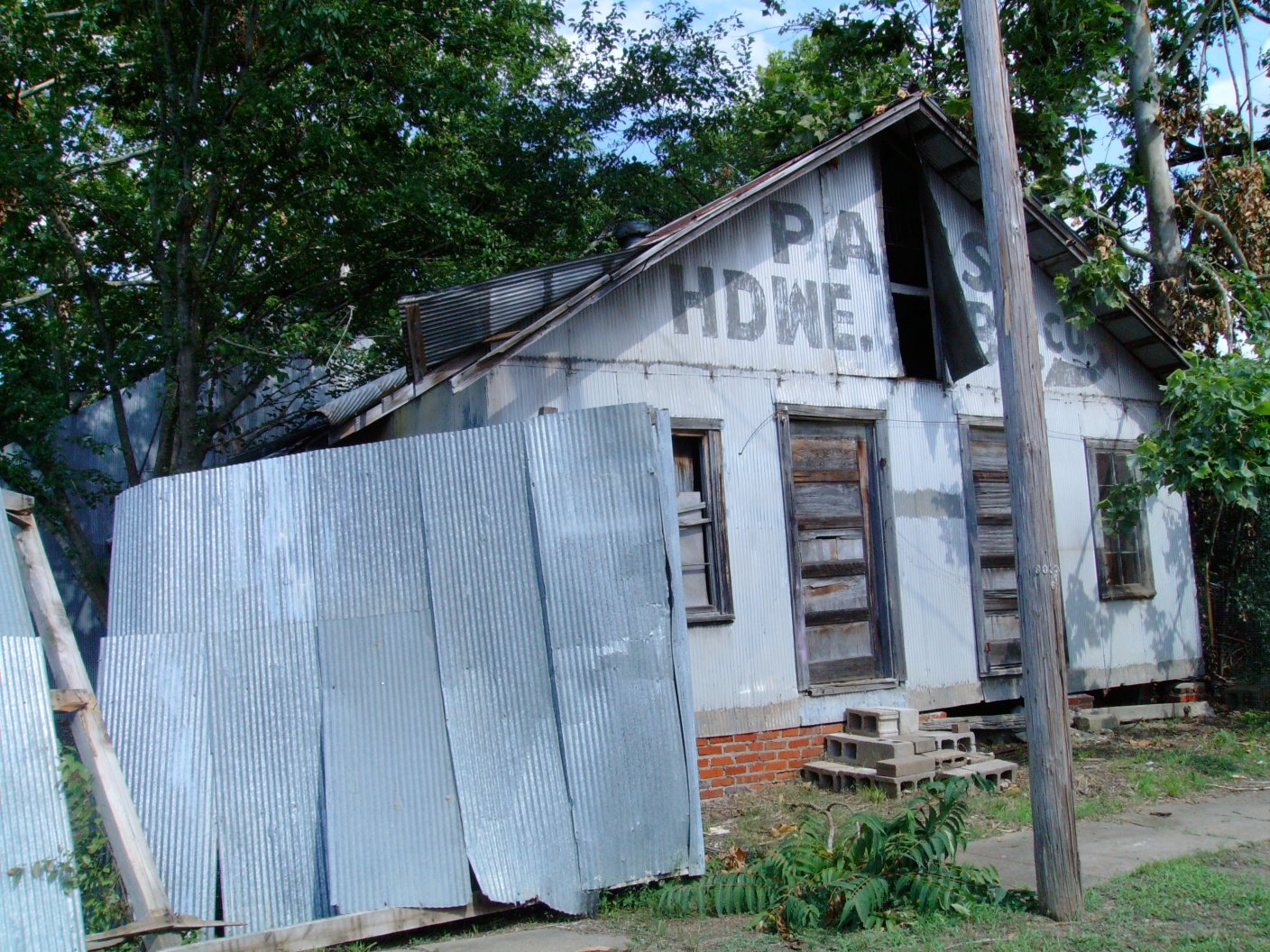
After a full day of scribbling with our delightful hosts, Steph and I made little road trips here and there because the antiques/flea market businesses around those parts are plentiful. A few miles away in Paris we found more shops than we could visit, as well as evidence of the Sunday night storm.

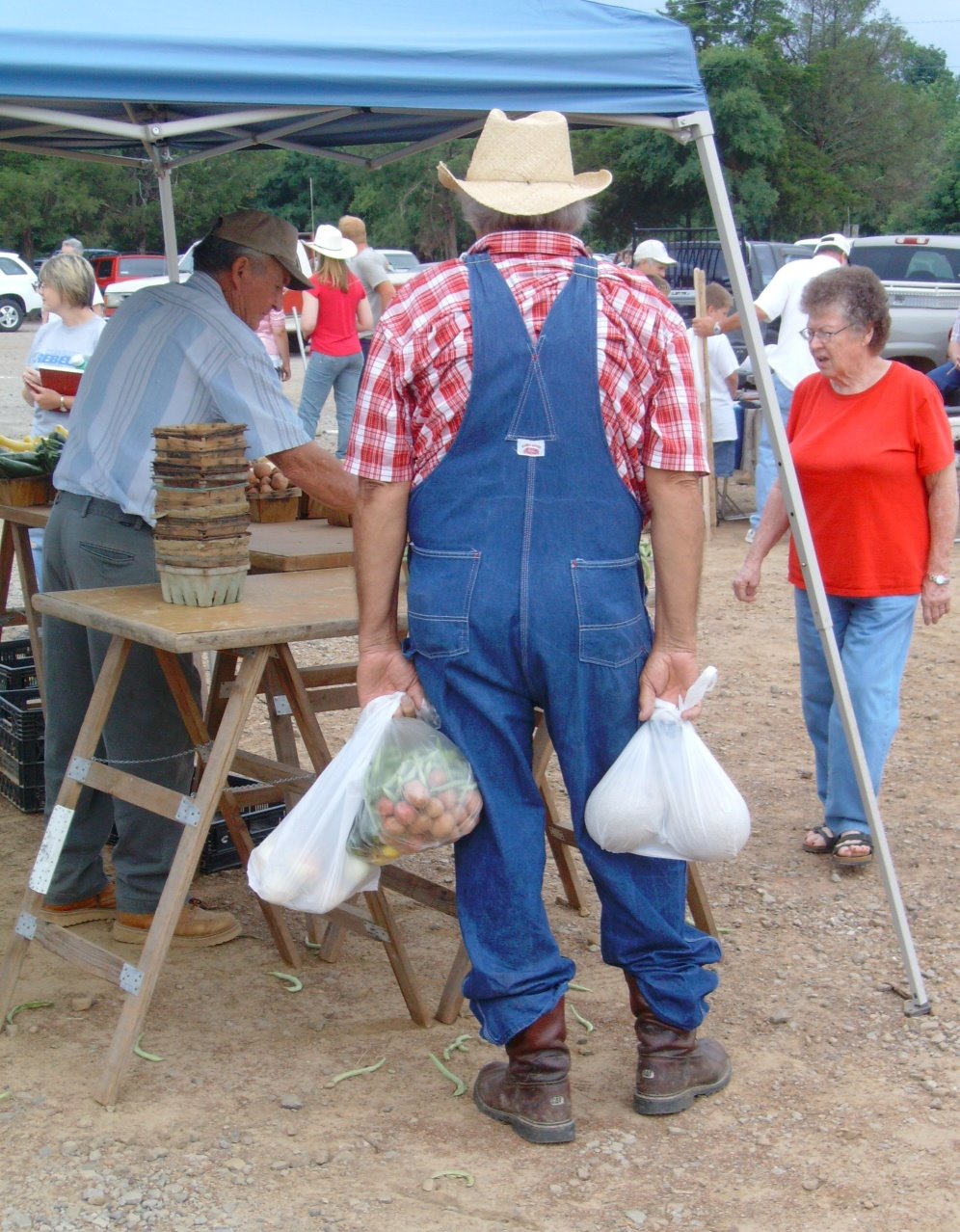
Each day we drove from Ozark proper to the County Line School about twenty minutes away in Branch. Stunning drive over the swollen river and through the hills. On Wednesday we hit the jackpot – the County Line Sale Barn parking lot filled up with all manner of sellers-with-tables and livestock in the barn. It was so enticing that we convened the entire workshop there for a Write-a-thon. It was hot as hell and threatening rain, but we threw ourselves and our notebooks into the fray and wandered around talking, interviewing (I use that term loosely), taking pictures, and buying tidbits.

Those tables covered in goods told some stories. Large collections of tattered western novels, a wedding dress in a plastic bag displayed from the sideview mirror of a truck, saddles and tack, old chiffarobes and dressers, hand-labeled honey, fresh vegetables, cigar boxes full of old costume jewelry – I honestly could have made an entire day of it.


While we all shopped and talked and wrote, the animals in the sale barn mooed and snorted and whinnied behind us. A gaggle of little girls gathered at a side pen petting baby goats while old men in starched jeans and straw hats sat behind a table of shotguns and guitars.

Clearly, this wasn’t just a place to exchange money and goods – it was the weekly social event. And they liked to talk. Once they asked us who we were and decided we meant no journalistic harm, the stories flowed. One of our teachers spent the morning on the tailgate of a pick-up talking to a WWII vet. Another met a man who knew her grandfather as a moonshiner years ago, which was news to her and facilitated a phone call to her mother to verify such a thing. Apparently it was true.

Despite my vow to live in the moment instead of constantly recording it, I did take pictures. I wish I’d taken more, actually, but that just gives me another reason to go back. The Write-a-thon turned out some some incredible scribbling from our teachers, and we gathered it all together in a hasty anthology to give them on the final day. I can’t thank our flittering education angel Claire enough. She is a marvel of efficiency and caring and can never, ever retire. No one else could be as ‘Claire’ as Claire.

So I’d like to thank Claire, the Western Arkansas Educational Cooperative, the County Line school, the cities of Ozark, Branch, Paris, Branch, and Altus, the incredibly fearless teacher/writers who attended the workshop, the night janitor at the Day’s Inn, the columnists of the Ozark Spectator, and every single person at the County Line Sale Barn for giving me the best week I’ve had in a very long time.

I will be back.

Letter to my Hero

No Telling


(This is a letter I wrote to my father a couple of years ago. I just ran across it, reread it, and realized that the tribute I wanted to write tonight was already written. Happy Father’s Day, Pop.)

Dear Dad,

At a National Writing Project leadership meeting a couple of weeks ago, Stephanie offhandedly asked us whether we thought of ourselves as writers who teach or as writing teachers who write. The question became much bigger than the moment, and I’ve been struggling with it each day since.

My first reaction was to say, of course, I’m a teacher first. The writing has always been there in the background as something I’ve done since I was a little girl. So the question at first felt like she was asking whether I was a teacher or someone who breathed. It seemed like an odd thing to ask.

But it wasn’t, and I think it may be the most important question of my life: Am I a writer who teaches, or a writing teacher who writes?

And I thought about what it is I that I do, instead of all of the things that I really wish I did. At the bottom of the question is the fact that I really can’t separate teaching and writing, can’t be primarily one or the other. I’m minimizing the struggle it took to come to this conclusion, but it was the process of questioning that became most important. I had to look at my life as it’s been and it is now and how I eventually want it to be.

And while I was in the process of deliberating my purpose, Mom mentioned that you’d been throwing the ball around on the practice field with some of the players. She was nonplussed, as Mom is sometimes, that you’d take a chance with your health to goof off with a few football players for no apparent reason. That’s her job as the Keeper of Our Physical Well-Being.

But she missed the moment, I think. I wasn’t there, but I know you, and the writer in me allows me to clearly imagine the old athlete in you loving the feel of the leather in your hands, fingers adjusting to the laces just so, firing a few well-aimed passes to reawaken the muscle-memory of what makes you feel strong. The Game. I also know, without even being there, that at some point you stopped passing the ball and began giving pointers, encouragement. That’s who you are. You ache for the feel of the ball, but can’t help coaching. They are one thing for you, symbiotic.

So when I began looking at my life as it’s been, I started with you: in the classroom and on the field with the junior high kids, later at Hendrix and UCA and Henderson and Austin College doing the same thing at another level. When you went to J.A. Riggs it wasn’t football, but it stuck for twenty-some years – a career choice I didn’t understand until you were at the end of it and I realized that despite your job title you were in charge of training salesmen and bringing in a new generation to the family business. You were, after all, coaching.

So now, as the Athletic Director when you could comfortably be retired instead, you’re throwing the ball around. And what I’ve discovered about you is that no matter what job, no matter what school or company or position, you are a coach. There really is no escaping who you are at the very core.

You were my coach, in fact, because the best parenting should be coaching. I do this with my own daughter, and it’s both my largest frustration and my singular joy. Coaching is hard because it’s a daily exercise in achieving endless patience. Teaching is something altogether different; it involves gathering knowledge that you then give to students like a present, and wait until they return it to you. Teaching involves written judgments handed our in red marks on papers or letters etched across report cards every six weeks. Teaching says, “I gave you the information and you got it, or didn’t get it.” End of story.

Coaching isn’t teaching. There is no way a coach can do the job without getting his own hands on the ball and demonstrating, pass after pass. Coaching actually requires that students begin imperfectly, and then pass after awkward pass, fumble after fumble, the student learns the feel of the ball, the arc of the run, the timing of the turn to complete the pass. Coaching allows the student proficience that appears to come out of themselves, because that is the ultimate goal of coaching – to hand over the delight of something successfully learned and see the student bloom in their own knowledge. The judging will always come from the students’ own hit or miss experience and is forever changeable because there is always one more game, one more opportunity to get it right. The glorious thing about coaching is letting go of the student, watching them become more than themselves and many times more than the coach. There is poetry in that moment when the student surpasses themselves and you. A true coach never feels less because he understood the whole time that surpassing was the point to begin with, that watching your students find inner and outer greatness is the entire reward. It’s a trophy-less game, but the trophy only matters to people who aren’t truly coaching.

I learned this from you, not because you taught it to me, but because you were the best coach I ever had. You coached me by demonstrating your life, then handed me the ball so I could, pass after pass, fumble after fumble, get it right and make the game my own. And finding this out has answered the big question for me. Because of you, I’m a writing coach who writes. Like you, I suspect that no matter what job I choose I’ll always, at my core, only find my life complete when I’m coaching students into their writing lives. Sure I’m a writer – always have been. There’s incredible joy in making the pen fly across the paper and tell the story that needs telling in the way I want to tell it. The important thing is that while I love it, it’s just not enough. Without the coaching I’d be just jangling around by myself in full pads with a loose chinstrap looking for a game.

I just wanted you to know that, in aching over what should have been a casual question and instead became the most important decision of my life, the example that is your life helped me make it. I know who I am because I found out who you are.

I love you, Pop,

Monda

Hi. I’m Monda and I’m an office supply addict.

No Telling

Ever since I was a little girl hanging out at my father’s desk, I’ve had a thing for office supplies. Yellow college-ruled legal pads, killer Swingline staplers that look like miniature Buicks, Flair felt-tip pens, copy sets you can load in a typewriter to make multiple, tissue-paper copies – pink ones. Oh, and empty “Blue Books” just made for writing tiny novels, steno pads with that fabulous “eye-ease” green paper, and boxes broken at the edges but stocked with hundreds of sheets of Eaton onionskin paper. I can’t even talk about my love affair with envelopes. It’s just too much.

You know, I lived the double-luck of having a father who was both a professor and a coach. You know what that means. Clipboards.

It was easy to keep me entertained and out of everyone’s way – Dad just sat me in the corner or at a spare table in his office (home or school), and there I’d stay scribbling and typing and stapling and creating. His Hendrix office sported an old Royal typewriter the color and weight of a boat anchor. At home, it was a spiffy early sixties Smith-Corona Galaxie. No one ever really taught me to type, and I never really learned in any productive way. It didn’t matter, though, since the whole point was to keep me busy and out of trouble. Besides, I had writing to do.

I imagine there are scores of teacher’s kids out there with the same accidental training. The other eventuality is this unhealthy craving for office supplies. It honed my tastes and made me quite particular about writing tools.

I’d rather write in my own blood than use a ballpoint pen, for example. And forget pencils. There’s just something about them that anticipates making a mistake. There’s nothing sexy about erasure and correction – I don’t like the temporary nature of that business. I’ve got a friend and colleague who refuses to use anything but yellow number two pencils of a particular make and model. Ticonderoga? Something like that. Bless his heart, is all I can say, because – writing instrument aesthetics aside – he’s having quite a time finding a damned pencil sharpener. They just don’t automatically install those in the back of every room like they used to.

Oddly enough, I’ve never craved fountain pens. Too scratchy. The only thing that pulled me away from felt-tip Paper Mate Flairs was the advent of gel pens, Uniballs in particular. I buy them by the box and always have about six jangling around in my purse. Ah, heaven.

Paper is where I get into real trouble. Those yellow, hardbacked, college-ruled legal pads are my siren song. Can’t stay away from them. Even though I’ve matured into more of a Moleskine XL Cahier kind of gal, I can’t leave Office Depot without at least one package of legal pads in tow. Besides, the Depot doesn’t sell Moleskine. For that I have to walk into a bookstore, and those trips only cause more shelving problems.

In my pre-Moleskine days, I bought stacks of chemistry notebooks. I still do, actually. For those of you unfamiliar, these are like composition books only more elaborately bound. The paper is that magical “eye-ease” green of old steno pads, but they’re college-ruled and the pages are numbered. As an angsty teen I bought these at the college bookstore and wrote page after numbered page of bad poetry covered in tears and cigarette burns. Last summer, I went to a lot of trouble to get those put on the college bookstore shelves again. Count on the fact that I always have at least one Moleskine and one chemistry notebook going at all times.

Just yesterday Strikethru introduced me to an entirely new affliction that I ordered immediately – Apica notebooks. I only bought one just in case, but I’m sure to soon start juggling three different scribbling books, dammit. Take a look at them – they’re irresistible and we can blame Strikethru.

Swingline staplers. The old ones never die or break, not even if you staple through leather or drop them fifty times. I have one on my desk right now that sat on my father’s desk in the sixites. It works like a charm and weighs a good three pounds – if I ever have the need it can double as weaponry. When it comes to staplers, newer is never better. At work, I’ve been through four plastic staplers in two years and good riddance to them all.
My addiction is too involved to fully explain in a mere blog post. To do it right, I’d need to make another trip to the Depot or some other Palace of Paper to get more supplies. Legal pads, probably. And file folders. Hmmm.

I think she’s headed for Chesaleen’s

Uncategorized


(A snippet of first-draft fiction for NaFloScribMo)

When I was twelve everything became too small and familiar. My mama’s house, my classroom at school, my little circle of friends I’d known everyday of my life, even my blue jeans suddenly became snug in places snug never landed before. And then I got The Visit.

I was completely unprepared for The Visit. I mean, there’d been talk at school and I’d heard mama whisper things about it, but it was a hazy something that never seemed important enough to ask about until I was Visited.

I was dying, knew that for certain. The pull at my belly was too painful for it to be just another sour stomach from too many radishes for lunch. I saw the blood when I went to the bathroom, so I knew I had a cancer or TB or something I’d never recover from, but I kept quiet because it was clear to me I’d have to die a private death. I was never going to let anyone look at my gunny to find the problem. So I sat there at dinner with mama and daddy and my two stupid brothers with a wad of tissue shoved between my legs.

Mama said grace. I couldn’t even consider thanking God for food when there I sat dying on a wad of toilet paper right there in front of my family, so I prayed extra hard instead so I could be strong for my dying moments and not be angry at God for the timing. Teetering on the razor edge of death is no time to start up something with God you can’t take back.

“Sister, I said ‘Pass them greens.’” I’d been praying so hard that when I looked up the whole mess of my family was staring at me like I’d just spilled kool-aid on the rug. I opened my mouth to tell them but all that came out was a wail I didn’t know I owned that lasted from the table clean into my bedroom behind a slammed door.

When mama came in she was mad as hell, hands on hips like one of them Amazon women. I could hear daddy’s boots shifting one foot to the other just outside the door, but I knew he’d stay out there and not come in to see my shame and dying because he couldn’t bear a crying woman.

“Explain yourself.” Mama’s plaid housedress towered over me on the bed and I was afraid, but not nearly as afraid of her as I was this dying.

“I’ve got the cancer, mama,” I wept through a whisper, “Don’t ask me to tell you where because I won’t.”

So mama just stood there and I just cried into my bed quilt for the longest time. I wanted hugging, but I wasn’t sure if I could give someone else the cancer and I just couldn’t be responsible for spreading dread disease. When Scrap Wilson got the fever, the health department man came out and put a quarantine sign over the door and everyone whispered hot and fierce about how wrong it was to subject a whole family to one man’s dying germs. I’d have to move out, I guessed, live in a tent all alone by the pond and wait it out until they found my body.

“You ain’t dying, Sister.”

Mama was unmoved and all I could hear was the muffling shuffle of daddy’s boots making their way back the kitchen. Ill as I was, there was only one thing to do.

Summoning the last of my living strength, I leapt past mama, slung open the door, stopped off quick in the bathroom to resupply, then ran through the kitchen and out the back door into the mosquito dusk. It was a long way to the road, but I ran it all with a half-roll of flowered toilet paper in my fist, and it wasn’t until I hit the gate that I looked back. No one was coming after me.

(This is another crooked piece of the Chesaleen stories. It’s NaFloScribMo rough, but there it is. I resisted the urge to write two pages on mama standing there hovering over the bed, which was the image I started with. We’ll see what happens when our new little woman makes it over to Chesaleen’s house and find out the real scoop.)

Slight Savagery

Uncategorized

I just spent a few minutes howling at Candace’s latest blog post, and noticed she had this quote posted:

Writing is a solitary occupation. Family, friends, and society are the natural enemies of the writer. He must be alone, uninterrupted, and slightly savage if he is to sustain and complete an undertaking. -Jessamyn West

Well, that’s an understatement. I know there are those who subscribe to the “grab fifteen minutes wherever you are” writing philosophy, and I’m sure it works for several of them. Kind of like knitting in the waiting room at the doctor’s office – sooner or later you have a whole sweater. It’s not working for me, though. That fifteen minutes only whets my appetite for a throw-down, pot-of-coffee, tweaking-the-infinite kind of writing session. It’s the whole reason I write at all. The joy is in total ink immersion.

There’s also the undiagnosed ADD thing I’ve got going on. Every little shiny thing distracts me, so it’s a much better plan for me to schedule uninterrupted alone time if I’m ever going to finish something longer than a poem. Hmmmm. That may be the reason I’ve always written poetry.

The thing is, I don’t really want to become the savage, slight or otherwise, I’d have to be to family, friends, students – anyone – just to get the writing done. There’s entirely too much Southern, 1960s upbringing in the way and I’ll never make enough money to have that therapeutically extricated from my DNA. I’m not sure it’s possible, anyway. I was bred to be cheerfully interrupted.

Years of single-parenthood didn’t help. When you’re the only grown-up in the house, there’s no such thing as Time Alone unless you lose a lot of sleep. I did, in fact, almost never sleep. For years. I wrote a great deal, but always with one ear listening for midnight bad dreams. that’s as close as it gets for many women and it only gets worse when you’re watching the clock on prom night.

Why, even Jessamyn West only began writing when she was recovering from tuberculosis. I’m not ready to contract an extended and dread disease to get that writing time I crave. And she was from Indiana. I’m not sure how that figures in, really, but I imagine it has something to do with a Northern ability to set personal boundaries. I may be making that part up.

Even as I write this I can hear The Perfect Grandson squealing and slamming toys and such in the next room. This wreaks havoc on that “sustain and complete” business. Not because he’s an annoying distraction, though – it’s because I want to be in there, delighting in his every moment. In a minute or two the phone will ring or the dryer will buzz and I’ll wander away. Happens every time.

NaFloScribMo and the Incredible, Levitating Draft

Uncategorized

Here’s the problem. I’m writing diligently on Chesaleen and getting into the wicked flow of the moment, angels dancing on heads of pins and the typewriter muse singing to me in Olivetti and such, and I suddenly realize there’s no story. None. The whole thing is going nowhere and seems to be mysteriously levitating, waiting for something to actually happen.

It’s possible to write seven pages of a story and find out it isn’t a story at all. It’s a prose poem or an articulated photograph or something. People talk and there’s insight and self-delusion enough to go around, but the action of getting from Point A to Point B just never materializes.

It’s entirely possible I’m writing outside my genre – not that I chose one in the first place. It chose me when I was a little girl. It’s frustrating to be labeled and even more so when it’s self-labeling, but it appears that at least for tonight, I’m a poet. Or a memoirist. Or a blogger. Dammit. Tonight I wanted to be a novelist.

So I have seven pages of Chesaleen sitting in the dark and listening to trains. I could cheat and call it backstory, but that’s just semantics. I’m going to put these pages away for National Rewrite Month and maybe they’ll look different then, but I doubt it. I like it too much to wad it up, although if I had a fire going I might consider throwing all seven pages into the flames, just for effect.

Maybe I’ll just have Chesaleen set something on fire.

Consignment Shop (NaFloScribMo)

Uncategorized

The mother/daughter team drags a torn black trashbag full of baby items and I suspect nothing in there ever belonged to either of them. Mama has an odor, wheezes, gave her front teeth to meth and is still high enough to think she’s pulling off normal. Mama’s insistent, though, hand on hips she wants top dollar, many dollars, any dollars.

No one else in the store. Just Mama, Daughter, store owner, me.

The daughter is a youngish thing, belly slack from teen pregnancies, sporting an unapologetic black eye. A catfight, a man, a door, something. Lots of reasons to have a shiner and no real reason to cover it up. While I wait in line she steals a toy and sees me watching as she sticks it under her shirt. She doesn’t care. This is what we do. So what.

The store owner lady takes a step back from Mama and toward her cash register. She’s got Christmas light earrings shaking slightly below permed hair and her sweatshirt has a Jesus fish pinned next to silver baby feet. They both float just above her heart. This isn’t the kind of customer she thought about when she dreamed the baby consignment shop with its plush infant baubles and tiny Easter dresses hanging just so on the racks. Like a year-round church-basement baby shower. Not today.

Mama’s tired of waiting so she heaves the lawn-and-leaf bag on the counter and dumps it out fast. A small mountain of dusty baby clothes, and from the middle an unopened can of powdered baby formula falls out and rolls against the daughter’s foot. When the girl and her black eye bend down to get it, she pulls the stolen baby toy out of her pocket and places both on top of the clothes. Here, mama. These fell out.

Mama is tweaking and and scratching her arms and looks ready to get loud when the bell over the shop door tinkles a bit. They all turn and look at me, but I’m still there.