
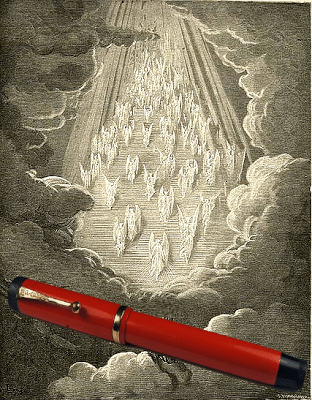
 (Scribbling Paradisio by Dore’, with a little help from me.)
I taught at a traveling writing workshop this summer down in Harmony Grove, Arkansas. School teachers, tired ones, met with us in that sweet but woebegone way public teachers do at the end of the school year. This is when they love their students the most but are cheerfully able to say good-bye for the summer. The workshop was splendid, and you can read about it here and here.
We used a book I’ve had in the workshop arsenal for a few years called The 9 Rights of Every Writer: A Guide for Teachers
- reflect
- finding personally important topics
- go off topic
- personalize the writing process
- write badly to unearth and clarify meaning
- observe other writers at work
- assess constructively – and well
- experience structural freedom
- unearth the power of each writer’s voice.
This is a powerful book for teachers. You see, most of them are scared to death of students’ writing because many teachers don’t see themselves as writers. That’s an important hurdle during the workshops.
As an opening scribbling prompt, my partner-in-workshop-crime Stephanie asked all the teachers to pick one of the rights they wish they’d had as students. Good opener. We all began writing. Kind of.
My pen hovered over the page for a bit. It had been a few years (coughcough) since I was a public school student. I tried to summon up something, some writing experience gone awry or pinch-nosed schoolmarm with a bleeding red pen. Nothing.
The thing is, I was a public school kid in the Age of Aquarius and Mimeographed Worksheets. With the exception of one senior-year research paper, all I did was fill out purple-inked (you know you can smell them) grammar and punctuation mimeos. They were like a puzzle, really. All you had to do was figure out the pattern.
In public school, no one ever tried to teach me how to write. Huh.
But the writing happened anyway. I began as Harriet the Spy
That morning in Harmony Grove I ended up writing about the freedom students need to scribble outside of standardized testing and five-paragraph nightmares. I wrote about the freedom to be left alone with the words, to develop fearlessness and a casual attitude because everything we write isn’t stark reflection of our worth. It’s practice. It’s play. It’s necessary.
They’re just words. We can always make more.
So go write something.
 No Telling